
Close your eyes and think of three commercials you remember. Not from this week. From your whole life. The ones burned into your brain.
Got them?
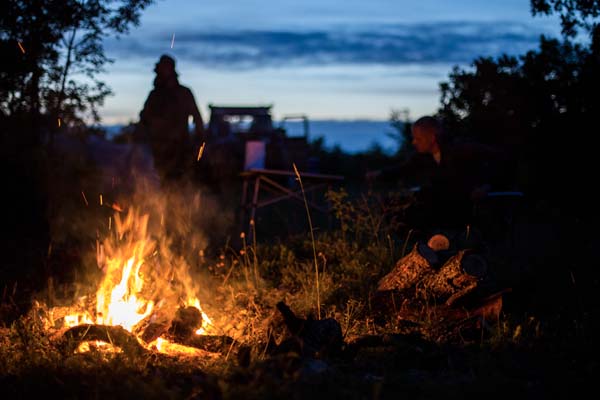
Now here is what I bet just happened. You did not remember the tagline first. You did not remember the music. You remembered a place. A desert highway stretching into nothing. A rain-soaked city street at night. A factory floor lit by a single window. The location came first. Everything else followed.
And that little detail changes everything about how we should think about commercial video production.
Because most brands — and honestly, most producers — treat location as a logistical problem. Where can we get a permit? What is the parking situation? Is there a power outlet nearby? These are fine questions. But they are the wrong first questions. And answering them first is the reason so many video commercials look the same. Clean. Professional. And completely forgettable.
So let me take you through something I have learned after years of producing commercial video content across cities, mountains, and abandoned industrial sites. It is a simple idea, but it will change how you see every commercial from this point forward.
Location is not your backdrop. It is your character.
Here is an uncomfortable truth about video commercial production. The industry has a sameness problem.
Scroll through any brand’s social feed. You will see the same bright studio. The same neutral cyclorama wall. The same perfectly lit product on a perfectly clean surface. It is technically good work. But it all bleeds together. Nothing sticks.
And the reason is simple. When you treat location as background, you strip your commercial of its most powerful storytelling tool.Think about it this way. When a film director casts an actor, they are not just filling a role. They are choosing a face, a voice, a physical energy that will shape how the audience feels about the entire story. Location works the same way in commercial video production. The place you choose tells the audience what kind of brand you are before a single word is spoken. Before the logo appears. Before the product is even shown.
Within the first 100–200 milliseconds, the brain is already extracting a rough read of a scene. That’s why your location sets the tone before a single word lands. That is faster than reading a headline. Faster than hearing a voiceover. Your location is speaking to the viewer’s subconscious before your marketing message even gets a chance. So if your location says nothing — if it is just a clean, safe, neutral space — you have wasted the fastest channel to your audience’s brain.
Here is where it gets interesting. In traditional video production for commercials, the location scout goes out with a checklist. Enough space for the crew. Good natural light. Quiet enough for audio. Accessible. These are all practical needs and they matter. But they are table stakes. They are the minimum.
When you start thinking of location as character, the scouting process changes completely. You are no longer asking where can we shoot? You’re asking what this place should say about the brand or the product.
A commercial video producer who understands this difference will walk into a location and feel it before measuring it. How does the light behave at different hours? What does sound do in this space — does it echo, absorb, feel intimate or vast? What textures are on the walls? What story does the architecture tell on its own?
This is not abstract creative thinking. It is practical. It saves money. Because when your location does the emotional heavy lifting, you need less of everything else. Less set design. Less post-production. Less explaining in the voiceover. The place speaks for itself.
Ridley Scott understood this before anyone. His famous 1984 Apple commercial — widely considered one of the greatest ads ever made — used a cold, industrial dystopia not as scenery but as the antagonist. The location was the villain that the product defeated. The concept of rebellion against conformity. The rows of shaved-head figures sitting in obedient silence. The lone athlete in color breaking through a grey world. The idea is what makes the ad brilliant. But the cold, industrial dystopia Scott chose as the setting is what makes the idea land. The location did not replace the concept or the casting — it amplified them. It gave the audience a world to feel trapped inside, so that when the hammer flies, the liberation feels physical. That is what location as character actually means. Not that the place does everything. But that the right place makes everything else hit harder.
Over the years, I have noticed that the most memorable commercials tend to draw from three location archetypes. Not because these are the only options — but because each one triggers a specific emotional response that is hard to achieve any other way.
Urban Grit
Concrete. Chain link. Cracked pavement. Subway tiles. Neon light bleeding through fog. Urban grit says: we are real. We are street level. We do not hide behind polish.
Nike brand understood this better than anyone. In the late 1980s and through the 1990s, Nike often chose real-world locations over polished studio sets. Their commercials were shot on outdoor basketball courts, in boxing gyms with peeling paint, on cracked sidewalks. This approach became inseparable from their brand. The grit was not a limitation. It was a declaration.
And here is the thing — this location archetype is not just for sportswear. Any brand that wants to communicate authenticity, resilience, or grassroots energy can use urban environments as a narrative force. Tech startups. Food brands. The city is a character that says we came from somewhere real.
The key is specificity. Not just any city street. The right city street. One with the right texture, the right light, the right imperfections. Because audiences can feel the difference between a location that was chosen with intention and one that was just convenient.
Wilderness
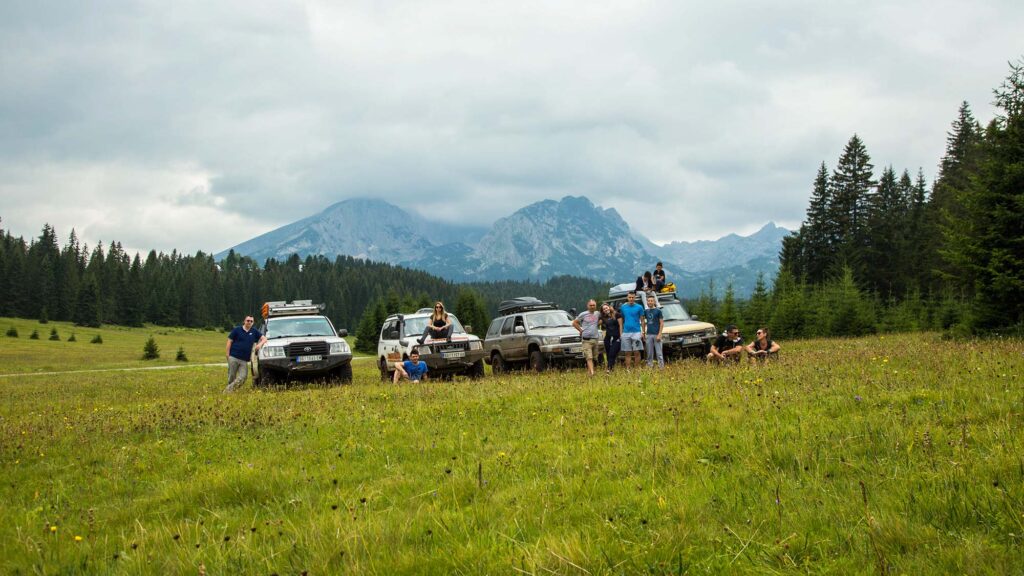
Open sky. Unpaved roads. Rivers, ridgelines, forests that go on forever. Wilderness says: freedom. Challenge. Something bigger than you.
This is the archetype that outdoor brands have built empires on. Patagonia does not sell jackets in their commercials. They sell the landscape. The jacket is just what gets you there. Same with Land Rover. Same with The North Face. The product is almost secondary to the place.
But here is the twist most people miss. Wilderness works for brands that have nothing to do with the outdoors too. Financial services companies use mountain imagery to communicate long-term vision. Healthcare brands use wide-open landscapes to suggest possibility and recovery. Even automotive brands outside the off-road segment use wilderness to convey independence and aspiration.
The reason wilderness works so well in video commercial production is scale. When you place a human figure — or a product — against an enormous natural backdrop, you create an automatic emotional response. The viewer feels small. Then the brand becomes the thing that makes them feel big again. That is powerful storytelling, and the location does all the work. What matters here is authenticity. The brands that win with wilderness are the ones that actually go there. Real locations. Real weather. Real light.
Industrial Decay
Exposed brick. Rusted steel. Old machinery. Warehouses with light pouring through broken windows.
Industrial decay says: heritage. Craftsmanship. Transformation.
This might be the most underrated location archetype in commercial video production. Brands like Jack Daniel’s have used distillery and workshop settings for decades to communicate history and authenticity. Levi’s does the same with factory imagery. Craft breweries, artisan food brands, and heritage fashion labels all draw from this well.
And the psychology behind it is fascinating. A 2024 study by Vevo, MAGNA and Initiative surveying nearly 5,000 U.S. consumers found that authenticity is one of the top drivers of brand trust — and when brand trust increases by just one point, average purchase intent jumps by 33 percent. Industrial locations trigger those authenticity signals in the brain — they suggest that something real was made here. That hands touched this product. That there is a story behind it.
But industrial decay is not just for heritage brands. Tech companies use it to signal disruption — the old giving way to the new. Creative agencies use it to communicate unconventional thinking. The location tells a story of transformation, and any brand going through a transformation can borrow that narrative.
Here is something that separates average commercial production from the work that actually wins awards and builds brands.
The best producers do not scout for pretty. They scout for emotion.
A photogenic location and an emotionally powerful location are not the same thing. A beautiful sunset over the ocean is photogenic. But it might say nothing about your brand. Meanwhile, a dimly lit stairwell with peeling paint might be exactly the emotional container your story needs.
This is where the craft of a skilled commercial video producer becomes essential. They understand how light behaves differently in a concrete stairwell versus an open field — and what each does to the viewer’s emotional state. A voice recorded in a cathedral sounds different from a voice recorded in a parking garage. Not just acoustically, but emotionally. And they make these choices intentionally.
So what does all of this mean for you?
It means your pre-production conversation needs to change.
Before you talk about scripts, before you talk about casting, before you talk about music — talk about place. Ask yourself: if our brand were a location, what would it look like? What would it feel like to stand there? What sounds would you hear? What would the light do?
This is not some abstract creative exercise. It has real, measurable impact on your commercial’s performance. According to research from Nielsen, ads with strong environmental context — meaning the setting plays an active role in the story — generate significantly higher brand recall than ads shot in generic or studio environments. The data supports what great directors have known for a century. Place is memory. And memory is what advertising is ultimately trying to create.
Here is a practical framework you can use for your next video commercial production:
Start by defining the emotion. Not the message — the emotion. Do you want the viewer to feel inspired? Grounded? Nostalgic? Energized? Reflective? Write that word down.
Then match that emotion to an environment. Inspired might mean mountain ridgeline at golden hour. Grounded might mean a workshop with worn wooden tables. Nostalgic might mean a small-town street at dusk. Energized might mean an urban rooftop at night.
Now go scout that emotion. Not on Google Images. In person. Walk through the space. Feel how it changes at different times of day. Listen to what sounds are there. Touch the surfaces. This is how you cast a location the way you would cast your lead actor. Great scouting is not about finding a pretty place. It is about finding the right feeling.
Let me leave you with this.
Every year, billions of dollars are spent on tv commercial production around the world. Thousands of commercials are released every single day. And the vast, overwhelming majority of them are forgotten within seconds.
But the ones that stick — the ones people talk about years later — almost always have one thing in common. They were not just filmed somewhere. They were filmed in something. A place with weight. A place with meaning. A place that did not just hold the story but became the story. Your audience will not remember what you said. They will remember where you said it.
So the next time you are planning a commercial, stop asking where you should shoot. Start asking what your location should say. That single shift in thinking is the difference between content and a commercial people carry with them.
And that is what great commercial video production actually looks like.